- László Krasznahorkai’s Apocalyptic Terrors by Jia
- Temporary Safety Becomes A Permanent Residence: The Refugees Stuck in Kakuma Camp by Elsa
- More Than Just an IC Trip: Eye-Opening Experiences by Zainab
- “It’s Never Too Late” to Care About the Environment by Jia
László Krasznahorkai’s Apocalyptic Terrors
By Jia
Book Rating: ⭐⭐⭐⭐

Is he a prophet or the devil? A visionary or a voice of doom? These are questions that the author allows readers to grapple with and at times forces them to confront.
The 2025 Nobel Literature laureate is Hungarian author László Krasznahorkai. All of his works got him the prize, with his novel being described as a “compelling and visionary oeuvre that, in the midst of apocalyptic terror, reaffirms the power of art” by the Nobel Prize Committee. Krasznahorkai’s work reaffirms that literature is art as it depicts the human condition through language. The prize brought his already renowned works renewed global attention.
His debut work Satantango, published first in Hungarian in 1985, then in English in 2012, is one of those novels that remains one of the striking doorways of his universe. The story unfolds in an isolated, decaying hamlet in the aftermath of war, where only a handful of inhabitants remain. The story centers on the arrival of a man who may or may not be the devil, a prophet, or just a violent man who creates fervor in a community clinging to its last shreds of order. It portrays the depraved and depressed aspects of humanity, surprisingly with a few humorous elements.
“Get it into your thick head that jokes are just like life. Things that begin badly, end badly. Everything’s fine in the middle, it’s the end you need to worry about.” In Santantango, Kraszhorkai uses one long paragraph with not a single line break, which is disorienting and used to defamiliarize the reader. This is further done by starting the chapter with random, unexplained events. Surely, you think that the picture will become clearer and you will eventually understand; however, ambiguity seems to be his rhyme and reason. With an unreliable narrator confusion becomes the point, mirroring the chaos and despair of a collapsing world.
Nevertheless, beyond the bleakness, there is a beacon of light, almost a conviction. Responding to the news of his Nobel prize win, Krasnahorkai remarked, “Without fantasy, it’s an absolute different life. To read books gives us more power to survive these very difficult times on Earth.” This shows his perspective on writing and literature in the world, art as endurance. It is this paradox that, in staring directly into human ruin, he insists that art still matters. Perhaps especially when everything else is falling apart.
Temporary Safety Becomes A Permanent Residence: The Refugees Stuck in Kakuma Camp
By Elsa
According to the UN Refugee Agency, there are 42.5 million refugees in the world today. Kakuma Refugee Camp in the Northwest of Kenya holds 300,000 of them, making it one of the largest refugee camps in the world. While refugee camps are supposed to be temporary homes, the average stay in Kakuma is over 10 years, and many who have arrived in recent decades don’t see any opportunity of leaving.
Kakuma Camp was created in 1992 in Turkana County. It was mainly for Sudanese refugees, but later opened for many other nationalities. Today, there are people from Somalia, the DRC, Eritrea, Uganda, South Sudan, and others. Due to the number of people and the camp’s size, it has become something similar to a society of its own, with over 1000 small business owners. Many consist of sewing, cooking, or braiding hair. However, the camp is nowhere near a free town. People are not permitted to leave the camp, and many stick to their designated areas.
Every month, each family receives rations consisting of cooking oil, lentils, rice, etc. In 2015, the UN’s World Food Program started a cash transfer program, coining the name “Bamba Chakula” (“Get Your Food” in Kiswahili). It provided each family with extra money, with which they could buy extra food, like meat or medicines. This is also what allowed more businesses to open, even if the majority are sustained on trading objects and food instead of money. As of 2025, this program has stopped, largely due to USAID cutting all their funding to the camp. This has also become disastrous for the food supply, considering it funded 70% of WFP’s food aid in Kenya. As a result, rations have been cut to 30% of the minimum healthy food intake, and since people have no spare money, this has led to a slow starvation process.
It seems as if people cannot leave this camp, and never will. It is supposed to be a temporary shelter, but with conflicts still plaguing the DRC, Sudan, Somalia, and many other countries, it becomes near impossible to return home safely. Integration into Kenyan society has been slow, and less than 2% of refugees are moved to a third country every year.
The Imani Project
The Imani Project is an extension of the orphanage Children’s Garden. Instead of housing kids, the Imani Project helps young women from Kakuma, aged 16-25. Many are teen mothers with no husband or provider, meaning they have no source of income in Kakuma. Additionally, since they are unmarried mothers, they are shunned by society, further reducing their economic opportunities. For the Imani Project, they go to a collective home in Nairobi, outside the city, and live there for 4-6 months. During their stay, they are taught how to sew, knit, and perform other practical skills. Additionally, there are math classes and sexual education, considering many girls don’t know that sexual intercourse leads to pregnancy. This, along with being forced to use sex in trade for food, is one of the reasons why teen pregnancy rates are among the highest in Kakuma in Kenya. 44% of women and girls in the camp face unmet needs for family planning and education on reproductive health.
The aim of the project is to inspire these young women to independently provide for themselves and their kids, starting businesses with the skills they learn. Since 2021, there have been 66 girls in total. Along with learning, the women are encouraged to speak about their experiences, which often are traumatic, as a way of mental healing.
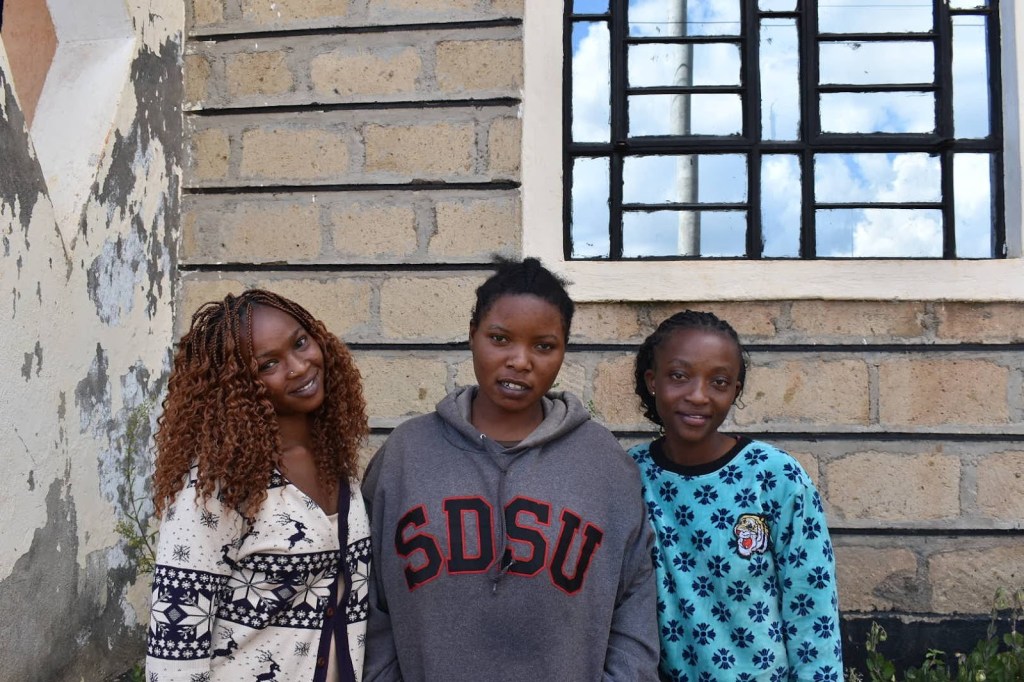
When speaking to three of the women from the second cohort of 2025, I could see their point of view on the project. They were aged 19, 20, and 24. Their day-to-day consisted of classes from 8am to 4pm, Monday to Friday. On Saturday, they cleaned, and Sundays were free to either go to Church or hang out with each other. All three women agreed that they would like to learn computer skills, but this is not yet possible due to a lack of funding.
“What will you do with your knowledge after your time in this project? Where will you go?”
One of the girls said, “We don’t have machines. We don’t have support.”
They are all aware of their lack of funding and support outside of the project. They learn to sew with machines, but they cannot afford to buy one when in the camp. With no starting capital, especially since the cash transfers have ceased to exist, it will be a struggle to start a business, as the project encourages. The women are strikingly aware of this fact, knowing there is little they can do, even with the skills and knowledge they have obtained.
This fact might not necessarily mean that the Imani Project doesn’t work, but rather that there is a systemic fault in refugee camps. With funding cuts, opportunities for refugees to get a better life are dwindling. Perhaps a solution would be to integrate them into society and release them from the barriers that hinder them from employment in the labour market? The camp is supposed to serve as a temporary safety, but it becomes a permanent residence for thousands.
More Than Just an IC Trip: Eye-Opening Experiences
By Zainab
Intercultural Trips (IC trips) are held annually and offer students opportunities to engage in real-world experiences, face challenges, and step out of their comfort zones. IC trips are designed to follow the pillars of ISK: Service and leadership, adventure and personal challenge, and, finally, intercultural learning and host-country appreciation.
Sometimes IC trips feel exhausting, but looking back, there are always those unforgettable moments that stick around.
Living in Kenya offers students a myriad of opportunities. One such, considerably “popular” hotspot is Watamu. Watamu is a small coastal town in Kenya, known for its white beaches and clear waters. I wanted to understand why this trip was considered so exciting, so I interviewed one of its participants.
According to their experiences, it’s definitely worth it.
How was the trip?
So we took the train there. We played lots of card games. It was long, but it wasn’t as bad. If we flew on a plane, it would leave a much larger carbon footprint than taking the train. And I also think we saved money by going on the train.
What type of activities did you participate in?
We went to the Hatamu Snake Park, which was really cool. I like snakes. I think they’re interesting. So we learned about the snakes. We went to this place where they turn bottle caps— the plastic bottle caps, and bottles into reusable plastic. And they built this kind of house thing with plastic bottles and stuff, so that was really cool. But before that, we had cleaned up the beach for an hour. It was really hot, but it was really cool. We found a lot of interesting trash.
What interesting trash did you find?
It was kind of funny, actually. My friend picked up a loaded diaper. We found some nasty stuff, but it was interesting. It put things into perspective: you sometimes see trash on the beach, but when you actually start looking for it, you realize just how much there is, which was sad. But then we took that trash to a place that recycles the bottles, and it was really cool to see what they do.
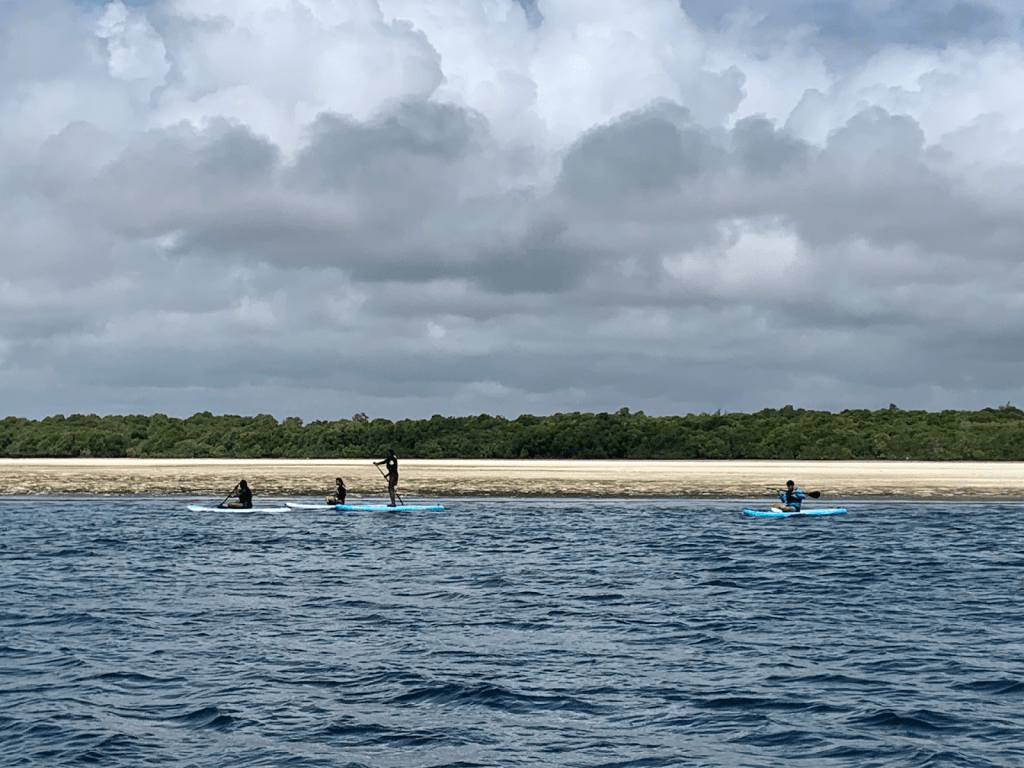
What were some fun activities you participated in?
We did stand-up paddleboarding in a creek. That was really pretty. And then we did tubing. That was painful. I had bruises everywhere, but it was one of the funnest things I’ve ever done. It was really nice. We went to this place called Kiritua Beach, where they’re doing coral restoration. They taught us all about coral bleaching and things like that. We actually went snorkeling. I’ve never been snorkeling somewhere like that. It was incredible. We saw really cool kinds of sea animals and stuff that I’ve never seen before.
I’ve heard from other students that you learned a lot about trees, specifically mangrove trees. Could you tell me more about that?
We learned about mangrove planting because mangroves have very deep roots, and so they hold the soil together, preventing erosion. There was this organization called LEAF, in Kilifi, and there were a bunch of people who lived near the area who were being affected by the erosion because something was happening to the mangroves, and there were fewer of them. Fish like to live in mangroves, and they (the people) eat the fish. They need the fish, so they’re planting the mangroves. Then we’ve got to plant some as well and learn about all of this.
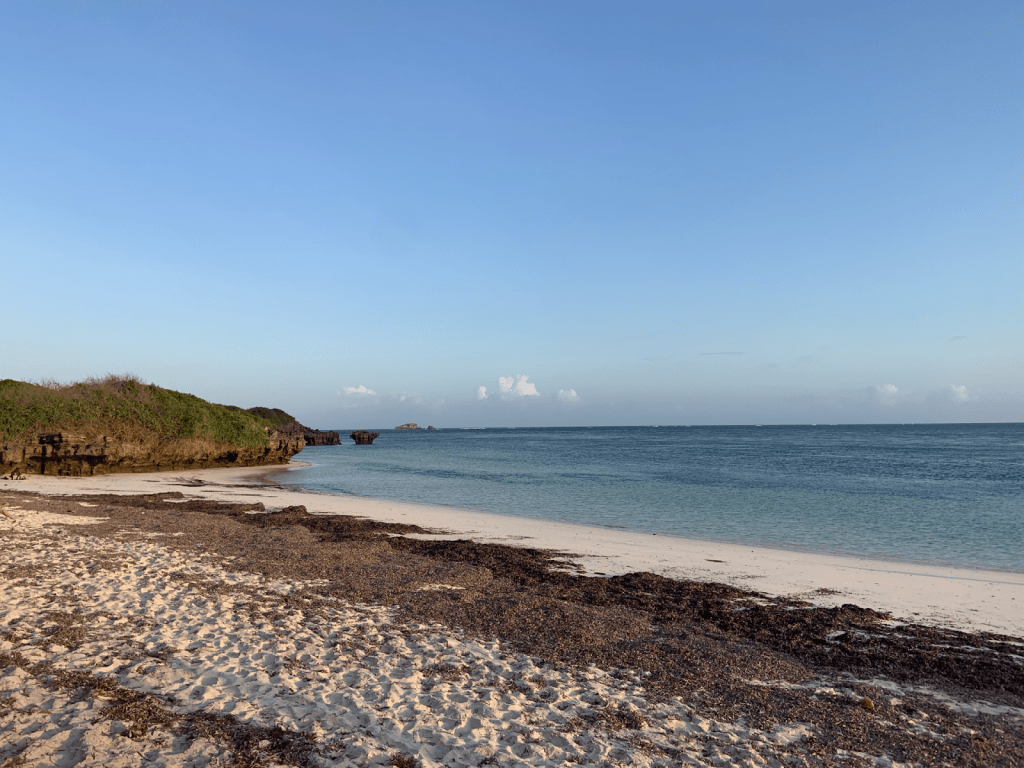
We went to this forest. It was one of the last remnants of a forest that ran from, I think, Ethiopia to Zimbabwe; a massive forest that used to cover a lot of Africa, and it has very specific wildlife that lives there. I didn’t get to see it because people were standing in the way, but there was apparently an elephant shrew, different species of trees, and things like that.
Was it worth it?
Oh, 100%. I’m scared that the next IC trips I’m going to go on aren’t going to top that one, because it was very eye-opening, but it was also, like, incredibly fun.
So, IC trips aren’t just a requirement; they show a purpose. Trips such as Watamu illustrate that, through service and cultural learning, students gain perspectives that stay with them and learn the importance of things that seem insignificant. In the end, IC trips create unforgettable memories and teach students valuable lessons by combining making a difference for the environment with fun activities together. The exhaustion is temporary but the impact stays.
“It’s Never Too Late” to Care About the Environment
by Jia
“What we do today echoes in the carbon of tomorrow.” Out of this philosophy, a project was created to make schools greener, smarter, and more sustainable.
The International School of Kenya (ISK) has an ambitious goal of being Carbon Neutral by 2030 in order to reduce its impact on the planet. However, the school faced the challenge of not knowing how much Carbon was being emitted.
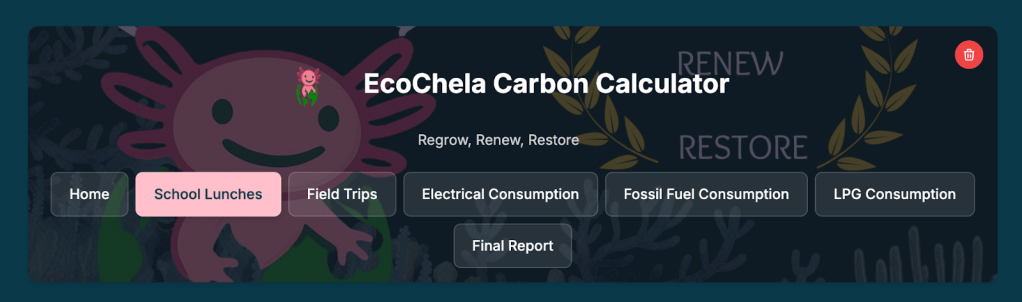
In 2025, that changed. A STEM Impact Project created by Hope, a student at ISK, introduced a solution: the Carbon Footprint Calculator, also known as ‘EcoChela’. Hope as well as working on this project has been involved in and led multiple environmental clubs like Mazingi Bees (formerly known as Students for the Environment) and the Carbon Neutral Alliance.
“What can I build now that still carries impact?” This is the question Hope asked herself when she started brainstorming ideas for her project. With EcoChela, her goal became making the invisible visible by turning the idea of carbon emissions into concrete, understandable data that could drive real change.
What is a carbon footprint calculator, and how does it work?
A carbon footprint calculator is a tool that allows users to input data and calculate the total greenhouse gas emissions produced by an individual, household, or organization, like a school. Hope says, “I needed a tool that was interactive and accessible.”
At ISK, the tool collects data from major emission sources, including the cafeteria, transportation during IC Trips, LPG (fuel used for cooking and heating) consumption, and electricity usage. One key focus area was the canteen. Different foods like meat, fish, and processed foods have higher carbon footprints compared to more plant-based options.
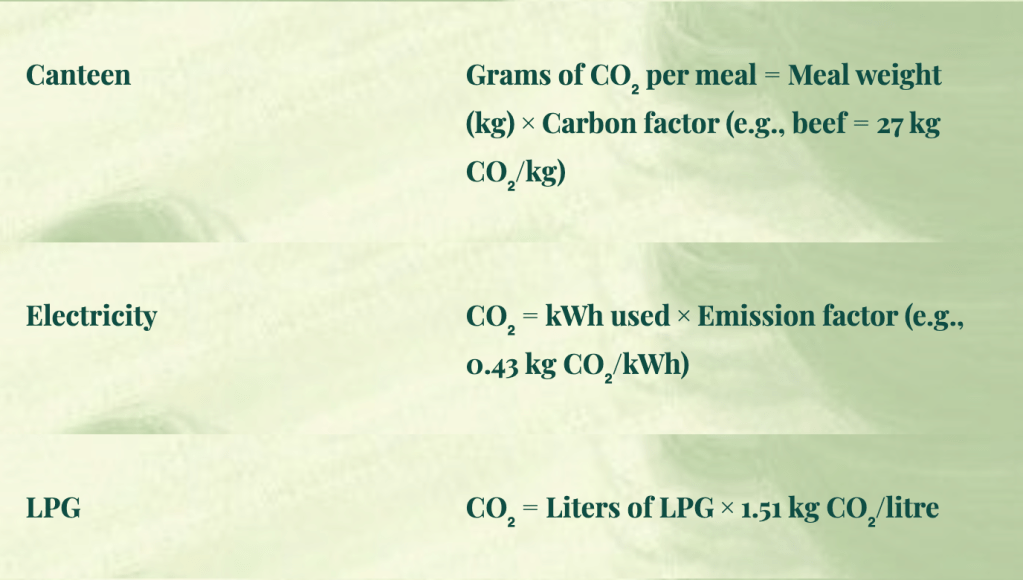
To measure this, Hope said she analyzed, “receipts, monthly reports, menus, and ingredient breakdowns from the canteen.” By combining this data with carbon emission formulas, she was able to estimate how much carbon was being produced by the meals being served.
The tool allows the school to input data to see what activities and departments contribute most to the school’s carbon footprint. Just as importantly, it also suggests solutions, helping the school to find out how to reach its goal.
Impact on the Community
One of the first major changes that the tool helped impact was the food in the cafeteria. Based on the data, ISK increased the number of vegetarian meal options. This shift helped lower food-related emissions, which also encouraged more conscious eating habits among the students and teachers at the school.
Another significant change that Hope mentioned was a change with IC Trips, which had been identified as a major source of emissions due to the use of planes in some of the trips, such as the Watamu trip. The school subsequently reduced the use of planes to just one IC trip, Iten, and instead prioritized using buses and trains.
Beyond specific changes, the tool has made data tracking easier for the business office, allowing the school to collect, store, and analyze the data from emissions easily.
Wider Reach
The Carbon Footprint Calculator has spread beyond ISK. Hope has started working with Peponi School to help track their emissions as well. We are now sharing the tool with other schools across Africa. By enabling multiple schools to measure their footprints, the tool supports a broader culture of accountability and environmental awareness.
Hope’s project shows that meaningful change does not have to start with governments or organizations. It can begin with a single student asking the right question and trying to make a change. At ISK, one student’s project has turned data into action and action into lasting change. A change you can make too by using her calculator to make changes in your household.
To learn more about this project or any other STEM Impact Projects from ISK, use this link: https://iskimpact.com/2025/04/25/isk-carbon-neutral-calculator/
*“It’s Never Too Late” is a NYT series that tells the stories of people who decide to pursue their dreams on their own terms.
 Elements Magazine