Page 1:
- Is Sabrina Carpenter the ‘Man’s Best Friend’? by Charlotta
- Beyond the Bottle: The Story of Portugal’s Vineyards by Karina
- We Developed AI to Solve our Problems – Now it’s Becoming One by Elsa
Page 2
- Feminism – Why is it so hard to understand? by Tisya
- “I am as human as anyone”: James Gunn’s Superman is the male role model the world needs right now by Maya
- Catastrophic Floods Devour Pakistan: Economy and Villages Submerge by Zainab
Page 3:
- Between Land and Sea: Mangroves by Jia
- Femicide in Kenya: Its Roots, Impacts, and Recent Resurgence by Anonymous
Is Sabrina Carpenter the ‘Man’s Best Friend’?
By: Charlotta

Pop sensation Sabrina Carpenter’s latest album, Man’s Best Friend, was released on August 29, 2025, and while the music is already climbing charts, it’s the cover art that has sparked the most controversy lately. It depicts Carpenter on her knees in a mini dress, her hair being gripped by a man towering above her, as she looks into the camera. The public has scrutinised her for this anti-feminist representation of herself and have called it a step backwards for women, accusing the singer of reinforcing submissive and patriarchal stereotypes. Yet others defend the cover as a bold assertion of self-identity and sexuality, arguing that true feminism lies within a woman’s right to define and display herself in any way she wishes without facing scrutiny from men.
The phrase “Man’s best friend” is associated with dogs, and Carpenter’s position (kneeling on all fours and having her hair pulled) plays into this symbolism as it creates the idea that she is the “Man’s Best Friend”, further creating this idea that she is reducing herself to something that can be led, commanded and trained. For many, Carpenter has overstepped the bounds as by presenting herself in this submissive way, she reinforces the stereotype that women are submissive and can be commanded and are pet-like figures in relationships and as a result degrades women. Critics argue that Carpenter is purposefully catering to the male gaze by sexualising herself, and as a result undermines the values of feminism. Many also feel that Carpenter strips herself of her own humanity by comparing herself to the level of a dog. To some, the choice feels not only degrading, but also shocking, given Carpenter’s platform and influence.
Others, however, don’t share these views and interpret the album cover differently, seeing it as ironic paired with the title. Within the album, she sings about her past relationships, and some argue the cover symbolises how she felt trapped and diminished in them. Her most popular track “Manchild”, calls out an immature ex-boyfriend, illustrating her experience with childish relationships which left her feeling inferior. Still, even if this was Carpenter’s intention, her public reach must be taken into account. With most of her fan-base consisting of young teenage girls, people worry that the album cover normalises this portrayal of women being subordinate or inferior. This is a core concern as Carpenter’s immense influence, and means she is not only expressing herself, but also shaping how her audience understands gender roles. Presenting such imagery as “normal” can be particularly harmful to young, impressionable fans.
Some even argue that this is a plan for Carpenter to attain more publicity, and as a result, boost her popularity and streams. This is a tactic many musicians employ, by sparking controversy they ensure that their name is in constant circulation online. For Carpenter, her album cover has become the focal point of this strategy. Moreover, she often depicts herself as a ‘stupid blonde’ and leans into this stereotype, portraying herself as forgetful and naive. By doing so, she cleverly uses the trope to her advantage, as she plays dumb.
That being said, there is a clear double standard when it comes to how sexuality is portrayed and expressed between male and female musicians, and this can’t be ignored. When men express themselves in a sexual way, it’s often celebrated as ‘self expression’ and is not seen as a major issue. Yet, when women do the same, their choices are often scrutinised and deemed “inappropriate”. This imbalance is persistent with women often facing harsher judgement than men. For example, Megan Thee Stallion frequently faces backlash from public and critics on her sexually explicit lyrics and performances. This was particularly seen when her and Cardi B released “WAP” where it was condemned as “vulgar” and “bad for society”, while male rappers like Snoop Dog and Lil Wayne have released equally explicit songs for decades without backlash.
Sabrina Carpenter’s Man’s Best Friend album cover has become more than just artwork. Is this cover a step back for feminism, or is it actually an ironic portrayal of self-expression that social media just doesn’t understand?
Beyond the Bottle: The Story of Portugal’s Vineyards
by: Karina

When thinking about Portugal, most people imagine golden beaches, Lisbon’s endless hills or Cristiano Ronaldo. Most people never venture to visit the vineyards. From the lush green valleys of the Douro in the North to the sun-drenched plains in the south, these grapes are vital for Portugal. However, they are under threat from climate change, and without action, they may soon perish.
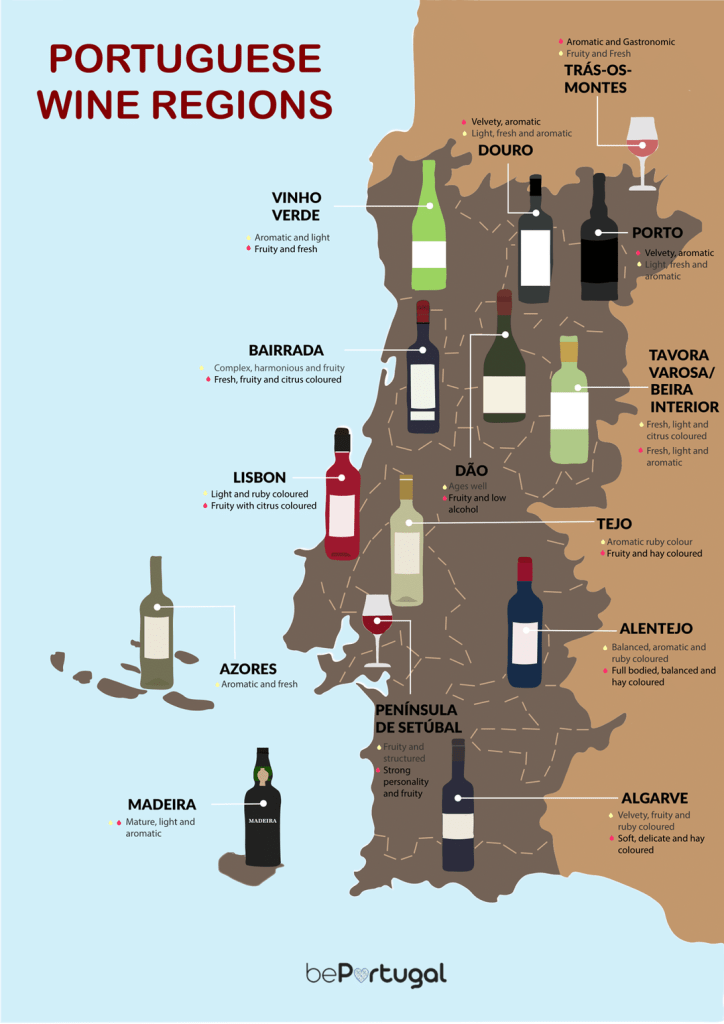
Regions and History
As of today, Portugal is the 5th largest producer of wine in Europe and the 11th largest in the world. Wine has been a part of Portugal since around 2000BC when the Tartessians planted vines in the Sado and Tagus valleys. The Phoenicians expanded on this, introducing proper winemaking techniques and new grapes to the area. Afterwards, the Romans spread this winemaking culture across the Iberian Peninsula. For them, Portugal was a prized possession as a wine region. Tombstones in the region were shaped as wine barrels, which shows just how much they loved their drink! Portugal was relatively isolated from trading their wines. However, after the Treaty of Windsor between England and Portugal, trade flourished between the two countries. The English grew fond of Port wine, affectionately known as blackstrap. This allowed the vineyards to truly expand and start becoming a powerhouse for the Portuguese economy.

However, the 19th century was cruel to the vineyards. The devastating phylloxera epidemic destroyed vineyards across Europe. Only the sandy soils of Colares provided protection for the grapes there. Many regions never recovered, and small producers were forced to abandon their vineyards, shifting instead into cork production. To survive this epidemic, American grapes that were resistant to this insect were grafted. This process ultimately saved the Portuguese wine regions. Nowadays, it is very rare for vineyards to contain vines that are from before the phylloxera epidemic.
These vineyards are vital to Portugal’s economy and identity. Wine is one of the country’s top exports, with Portugal producing over 7 million hectolitres annually. Famous wines like Vinho Verde and Port are internationally loved. This industry helps to sustain thousands of jobs, not just in agriculture but in tourism and hospitality. The Douro Valley, a UNESCO World Heritage Site, attracts visitors from across the world who come to taste its wines and enjoy its terraced hillsides. Vineyards connect generations and families, as many estates are family-owned, with traditions and knowledge carefully passed down. Therefore, there is a strong sense of pride in families for their own vineyards.
The Vineyards are very resilient but face an uncertain future. Rising temperatures caused by climate change are pushing grape harvests early into the year. This alters the balance of sugar and acidity of the grapes, which is vital for the sweet taste of the fortified wines. Droughts are increasingly becoming more common in the Alentejo region, and wildfires are becoming ever more common. The most recent ones were in August 2025, when winemakers reported losing up to half or all of their estates. Coastal regions are not safe either, and soil erosion is straining the vines’ health. Unfortunately, if these trends continue, many sensitive traditional grape varieties like Artinto may be wiped out.
Winemakers are working tirelessly to try to adapt. Many vineyards are shifting most of their vines to the highest altitudes in their vineyards. Here, the temperature is relatively cooler. The Duroro Valley uses its traditional wine-making methods that are ideal in the fight against climate change. The vineyards are built on stacked stone terraces known as socalcos. These prevent soil erosion on the steep slopes and allow for just the right amount of sun for grape growth. They also ensure that water does not evaporate quickly and reaches the plants. The stone walls to support these terraces are heat sinks, which help protect these vines.

In the Aletenjo region, the largest wine region of Portugal, they are diversifying the types of wine they make and thus the grapes they grow. This ensures that they have different harvest times for each grape type. Here, they rely on using traditional clay amphorae called talhas. This is an ancient method of fermentation and allows winemakers to better control the impact of temperature variations when the grapes were growing. They also use levadas, which these water channels used for rainwater harvesting and provide water for the whole community even in periods of heavy drought.
On Pico Island, they use currais. These are traditional stone wall enclosures to protect the vines from the salty ocean winds and to retain heat for them. However, they still struggle with harvesting freshwater as they lack the resources for it.
Portugal’s vineyards are living landscapes with a rich history behind each vine. Each region has a unique story and tradition for making these world-renowned wines. But with climate change casting a long shadow, their future remains uncertain. Certain regions have managed to adapt for now, whilst others have been forced to sell their wine estates. The fight to save these vineyards remains a goal to preserve not only the grapes but a heritage that is a part of Portugal’s identity. For travellers and oenophiles, visiting these vineyards is both a celebration of their beauty and a cold reminder of what is at stake.
We Developed AI to Solve Our Problems – Now it’s Becoming One
By: Elsa
It’s hard to say when AI was first invented, though many agree it was in 1956 when the term “artificial intelligence” was introduced at Dartmouth College, and the concept of AI was founded. Even if it’s been around for decades, artificial intelligence didn’t become popular until more recently, in a world where everyone has access to the internet. Today, the idea is that AI will bring solutions to world problems like poverty and climate change, as well as help us in daily life. However, the tool that was supposed to be our saviour is now stripping our planet of essential resources, becoming part of the problem it was meant to solve.

Technicalities of AI
As of May 2025, a simple Google search will give you an AI overview automatically. Extensive AI checkers have been developed to inspect the sincerity of school work, mostly due to the rapid rise of ChatGPT. The latter might be the largest issue of AI that many people can come up with, but there is a much darker side to AI than the majority is aware of.
Like any server or large amounts of data, AI needs to be stored and operated somewhere. Today, servers are out of sight and out of mind, but it wasn’t long ago that physical servers filled entire rooms. That sort of effort is unimaginable for most, but as many say, nothing on the Internet is lost. In that case, it must go somewhere, right?
AI Requires 500ml of Water to Write a 100-word Email
We all know what happens to our computer when too many tabs are open; it overheats. Wouldn’t the same rules apply to a supercomputer of AI in a large data centre? Yes, they do. Water is used to cool down the servers to keep them functioning. It sounds reasonable in theory, but the practical use of water is anything but. AI requires 500ml of water to write a 100-word email for cooling and electricity generation. Imagine how much water is needed to sustain the billions of ChatGPT users every day.
But water isn’t the only thing AI needs. Electricity and energy are also major needs, and as with everything, it has to be produced somewhere. Energy production forms around 60-70% of our carbon emissions globally, and those are the figures estimated before AI entered the picture. If the world needs energy to sustain a whole other sector, how much more energy do we need? This might’ve been less of an issue if we had developed sustainable energy options, but as of 2020, 80% of our energy comes from fossil fuels. Are we meant to pump out more fossil fuels into our atmosphere?
The Food & Water Watch, an organisation fighting for sustainable water, food, and energy, estimated that by 2028, AI in the US could be using as much electricity as 28 million households. In 2027, the total water use could reach 6.6 billion cubic meters. Considering 1% of the world’s water is within humans’ reach to consume, with the remaining 2% of our freshwater being frozen and the rest consisting of saltwater, there just isn’t enough water to sustain both our increasing population and demands, as well as AI.
Instead of solving water scarcity and creating solutions to reduce our carbon emissions, AI is putting pressure on our freshwater resources and pumping carbon dioxide into the atmosphere. Is this what is considered our saviour?
 Elements Magazine